
Riding a bike to work saves money, keeps you in shape and helps save the environment. 


P.A. MacLean
RedwoodAge.com
In Houston, the capital of the oil industry, even Chevron is sounding alarms about energy consumption. It recently put up signs in the city’s main airport noting that there will be 50 percent more cars in the world by 2030. If that doesn’t scare you, try this: the world consumes two barrels of oil for every one discovered.
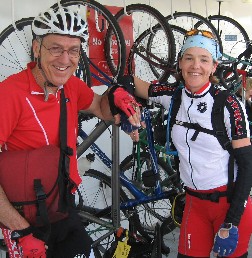
Between those fun facts and the gloomy report on global warming from the Panel on Climate Change in February, you may be wondering how you can act locally to solve this global problem. And wouldn’t it be nice if you could improve your health at the same time?
Maybe it’s time you dusted off your old bicycle buried in the garage, pumped up the tires and hauled yourself to work for free. Bike commuting isn’t just for eccentrics. It’s fun, it’s (almost) free, it’s healthy and it’s easier than you think. Plus you’ll get the satisfaction of knowing you’re doing your part to end global warming.
And once you get going, you probably won’t want to stop. I switched to bike commuting five years ago and now commute about 20 miles a day nearly 5,000 miles a year by riding in all but the most inclement weather to my job in downtown San Francisco.
Not only does it feel great, there’s never a traffic jam and the vistas can be inspiring. On most mornings, I see dozens of sleepy-headed herons, mallards and Canada geese from a bike path along the edge of San Francisco Bay. And I’m not the only one who finds advantages in this mode of transportation.
"It keeps you fit like nothing else, and it’s healthier for the mind, too," said Rudi Verhoeven, who has been commuting from Marin to San Mateo counties in California for five years, usually combining a 15-mile ride with a cross-bay ferry ride. "Another reason is that it’s cheaper than a car. And it doesn’t result in all that pollution."
Verhoeven, 57, a painter who maintains a side-career in astrology, said he’s become such a fan of cycling that he now competes in races on his weekends.
Another ferry boat biker, Susanne Kaufmann, is a native of Denmark where cycling is much more popular with average folks than in the US. "My parents never owend a car. If you wanted to go to the beach, you rode your bike," said the software engineer, who’s been living in the US for 15 years.
Sure, you say, it’s easy to do that in California, but what about Minnesota, or Pittsburgh, or any of the other places where the roads turn white in the winter. Realistically, there may be seasonal limits on when you can ride and when you can’t. But one can ride a bike in most places between six and 11 months of the year. Just ask the folks at your local bike shop, wherever that may be.
Some cities are friendlier to cyclists than others. Slapping some painted bike lanes on busy streets is a start but bike lanes alone don’t make a city bike friendly. However, riding a bike on city streets simply takes some common sense and courtesy. You’ll soon find it’s not much different from walking across a street.
Marin County, California, where I live, is one of four communities taking part in a $25 million multiyear federal study aimed at getting people out of cars (the others are Sheboygen County, Wis.; Minneapolis-St. Paul; and Columbia, Mo.). The project will look at better routes, more lighting, parking, employer incentives and other methods of encouraging people to save gas and get some exercise.
The biggest roadblocks to getting people out of cars and into bike commuting are safety fears, “the ride is too far,”no shower or parking facilities once you get to work and feeling too out of shape to try it, according to Deb Hubsmith, advocacy director of the Marin County Bicycle Coalition.
Fear of being hit by a car is real, she said. Statistics in California show 20 percent of all road fatalities are pedestrians and bike riders, with bikers accounting for 3 percent of that. But cycling groups offer street skills classes, she said. “And people think of biking the same roads they drive, but there are a lot of alternatives, from less busy streets to hidden paths you don’t see driving,”she said.
A 2003 public health study of cycling in the US, Germany and The Netherlands found there is strength in numbers. The more people ride on bikes, the safer it becomes. In German and Dutch cities, where rates of cycling are much higher than the US, injury rates as a percentage are lower.
Garage Sale Bargains
But getting started doesn’t take an act of Congress. Start by getting a bike. It doesn’t have to be fancy – a $10 garage sale special will do for most people. Almost any bike will do if it feels comfortable and works properly. You can always upgrade to a new bike when you figure out what you really want.
Then start with a weekend ride to your workplace. Avoid the busy streets and find out if there are bike routes that head in your direction. Local cycling groups or your city’s recreation commission can help you locate existing trails.
The cycling study showed 41 percent of all U.S. auto trips were less than 2 miles, an easy distance to cover by bike.
You need to consider practical matters. Will you ride in your work clothes? If not, where will you change? Will you need a shower? Where will you park?
The answers are different for almost everyone. But there are answers to all those questions. Maybe you can ride to your gym. Many office buildings offer free bike parking and showers, so ask around. Almost all transit agencies accommodate bikes, so you might be able to ride part way.
You can pack your clothes in a saddlebag, or take a week’s worth in one day and bring them home at the end of the week. Maybe you can keep a pair or two of shoes at the office, eliminating the need to carry the heaviest part of your wardrobe.
Carry a headlight and tail light on your bike, not just so cars can see you but also to let you see the pothole before you hit it. You can buy all the basic equipment you’ll need for less than it costs to park for single day in the heart of many cities. And think about the money you’ll save on gasoline.
What to wear? If you’re into Spandex, try loose fitting, cotton clothes. Wear light, bright colors, especially at dawn and dusk. You should feel a little cool when you start because you’ll warm up when you ride. A zippered sweatshirt is ideal for most cool days. And always wear a helmet, even for short trips on quiet, familiar roads.
Once you get going, you’ll discover there are a lot of people who commute by bike. And you’ll find that almost all of them are eager to share ideas of how to make bike commuting easier. Soon you’ll be offering tips of your own.
Sorry, comments are closed for this post.